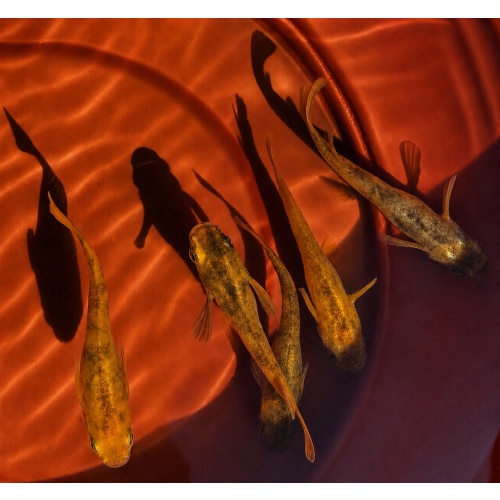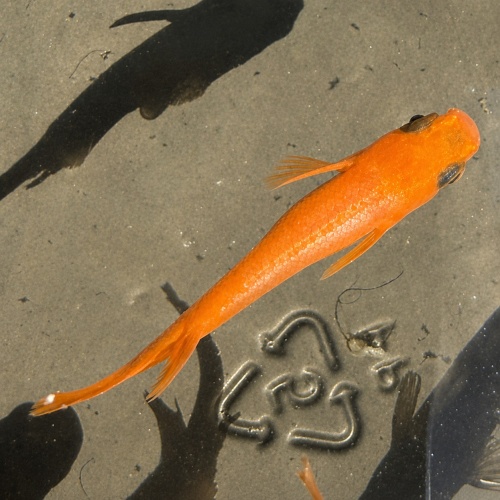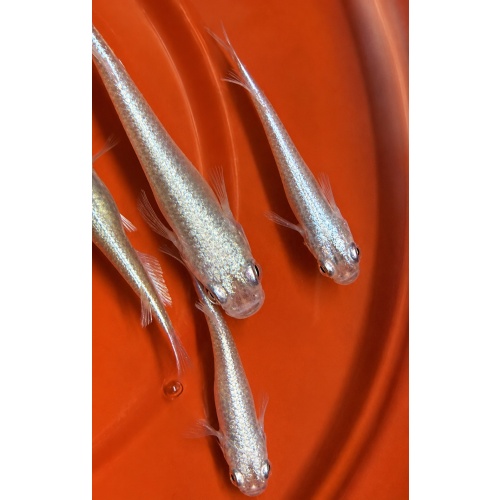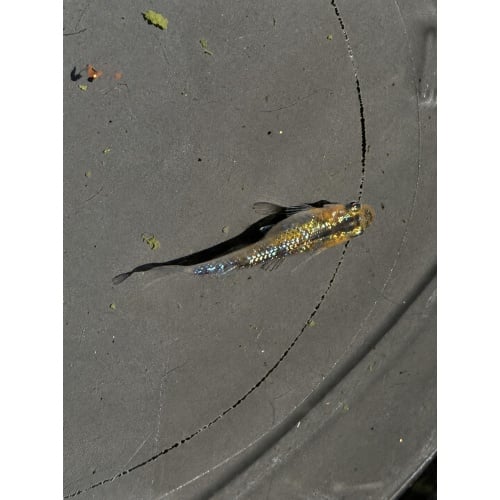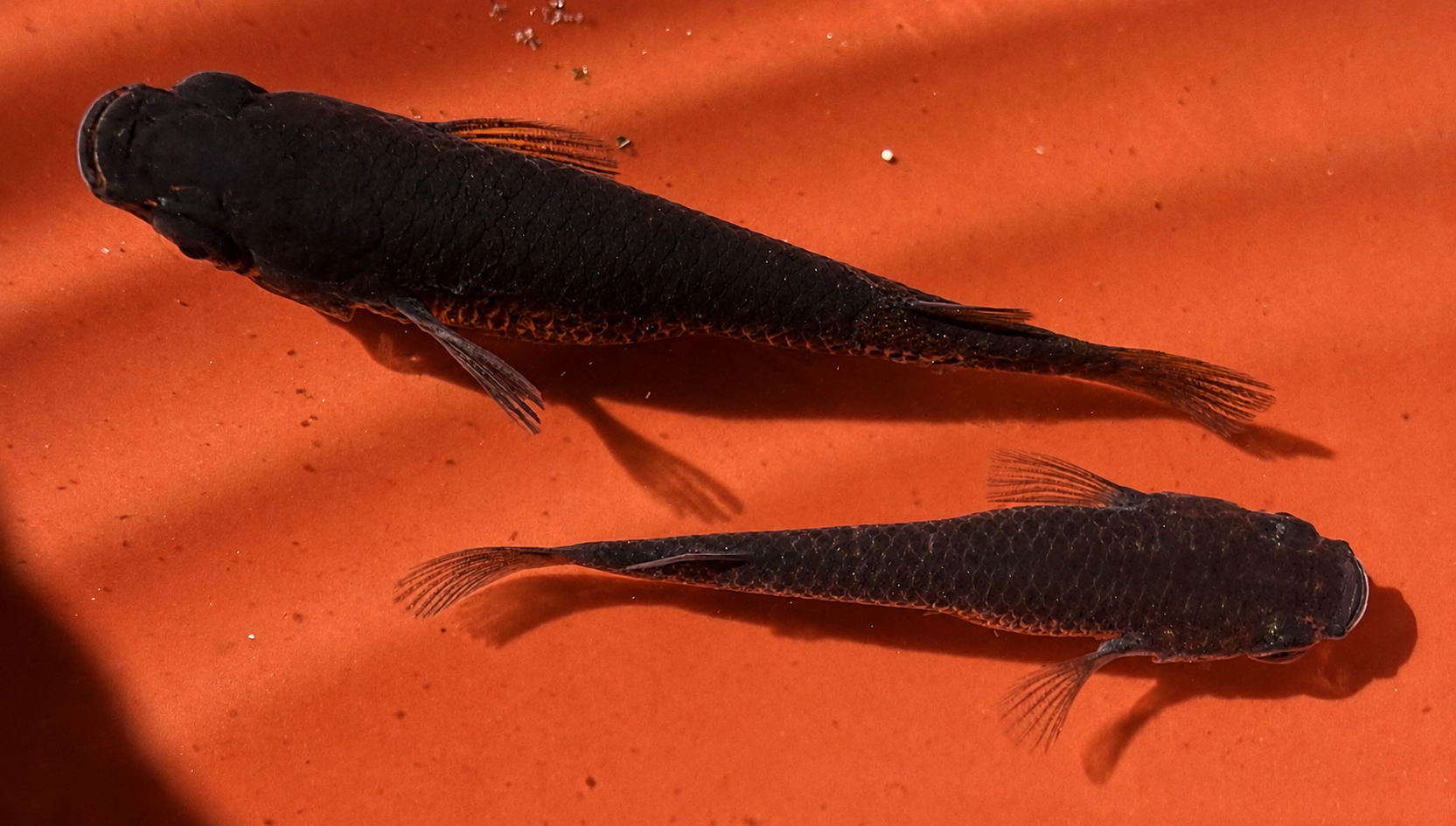
This listing is for 10+ fertilized Orochi Medaka eggs from my breeding group.
Orochi Medaka are known for their exceptionally deep black coloration. Unlike many dark Medaka strains that can appear gray or washed out when moved into pale bowls or clear containers, Orochi retain a rich, midnight-black appearance even in lighter-colored containers. Their dark pigmentation extends across the body, fins, and head, giving them a dramatic, nearly solid-black look.
This line is valued for:
Background color can dramatically affect the appearance of many Medaka strains, but Orochi are specifically known for maintaining their dark coloration even when viewed against white, pale blue, or clear surroundings.
As the fry grow, pigmentation will develop gradually. Juveniles may not immediately display the full depth of black seen in mature adults. Coloration generally becomes stronger with age, quality nutrition, appropriate lighting, and suitable environmental conditions.
The eggs should hatch within approximately two weeks of arrival, although many will hatch sooner depending on their stage of development and water temperature.
Newly hatched Medaka are most vulnerable during their first two weeks of life. I strongly recommend using a separate hatching container or nursery to prevent the eggs and fry from being eaten by adult fish.
Adding live plants is highly beneficial. Java moss or a similar fine-leaved plant provides cover, supports infusoria, and gives newly hatched fry access to microscopic food.
There is generally no need to feed newly hatched fry during their first couple of days. They will continue absorbing their yolk sac and may also feed opportunistically on infusoria introduced by live plants.
I personally maintain a small Daphnia culture in my hatcheries. Adult Daphnia are usually too large for newly hatched Medaka to eat, but their offspring provide an excellent live, water-stable food source for developing fry.
This is a critical stage in the Medaka’s development. The fry should be fed every day to prevent stunted growth and reduce losses.
Finely crushed flake food once per day can be sufficient, although feeding small amounts more frequently is encouraged. Many fry can begin eating freshly hatched baby brine shrimp at around three days old.
Avoid overfeeding, as excess food can quickly affect water quality in a small hatching container.
The fry are still delicate during this period, so strong filtration and heavy water current should continue to be avoided.
Daily feeding is still recommended, although an occasional missed feeding is much less likely to result in losses than it would during the first week.
After the first two weeks, raising Medaka becomes comparable to raising guppy fry, and their care is very similar.
They will continue to grow stronger and accept a wider variety of foods. As they approach 30 days old, the fastest-growing fry may be large and developed enough to hold their own around adult Medaka, although size should always be assessed before combining them.
The eggs will be inspected before shipment and will show signs of fertility or development at the time they are packed.
Hatch rate cannot be guaranteed because egg development may be affected by shipping conditions, temperature, handling, water quality, and the buyer’s hatching setup. Normal variation in hatch timing and fry development should be expected.
The listing photos show the actual parent breeding group and are intended to represent the genetics and expected adult appearance of the offspring.
Individual fry may vary in body shape, pigmentation, and overall quality. Not every offspring will develop identically to the parents, and normal variation should be expected within any breeding line.
Eggs will be carefully packed for shipment, and shipping is included in the purchase price.
Please monitor tracking and retrieve the package promptly after delivery. Do not allow the package to remain outdoors in direct sunlight, freezing temperatures, or extreme heat.
Please check your local laws and weather conditions before purchasing.