

![Riccia fluitans [1 portion]](/uploads/cache/Screenshot2026-07-02at11157PM-500x500.png)
Aquazon 0
Riccia fluitans [1 portion]
One plant, two looks: float it or carpet it.The aquascaper's classic. Let Riccia fluitans drift for fry cover, or tie it down for a bright green carpet. It thrives just about anywhere.Add a portion to any fish box for little to no extra shipping.
$10.00
![Salvinia cucullata Floating Plant [1 portion]](/uploads/cache/PLANT-Salviniacucullatafloatingfern-500x500.jpeg)
Aquazon 0
Salvinia cucullata Floating Plant [1 portion]
Asian Watermoss: little green cups that clean your water.A compact, fast-growing floating fern with bright green cup-shaped leaves that pull excess nitrates and ammonia while sheltering fish, fry, and shrimp.Add a portion to any fish box for little to no extra shipping.
$7.00
![Salvinia oblongifolia [1 portion]](/uploads/cache/PLANT-Salviniaoblongifoliafloatingfern-500x500.jpg)
Aquazon 0
Salvinia oblongifolia [1 portion]
Giant Water Velvet: big, fuzzy, and fry-friendly.As a fast-growing floater, it thrives in calm, low-to-high light aquariums without needing CO2, effectively absorbing nitrates and providing excellent shelter for fry and shrimp.Add a portion to any fish box for little to no extra shipping.
$7.00
![Azolla Floating Plant [1 Portion]](/uploads/cache/PLANT-AzollaspMosquitoFern-500x500.jpg)
Aquazon 0
Azolla Floating Plant [1 Portion]
A tiny floating fern that works overtime.Azolla, commonly known as Mosquito Fern or Fairy Moss, is a fast-growing, free-floating aquatic fern ideal for freshwater aquariums and outdoor ponds. It absorbs excess nitrates, outcompetes algae, provides excellent cover for fry/shrimp, and fixes nitrogen, making it a great natural fertilizer.Add a portion to any fish box for little to no extra shipping.
$7.00
Aquazon 0
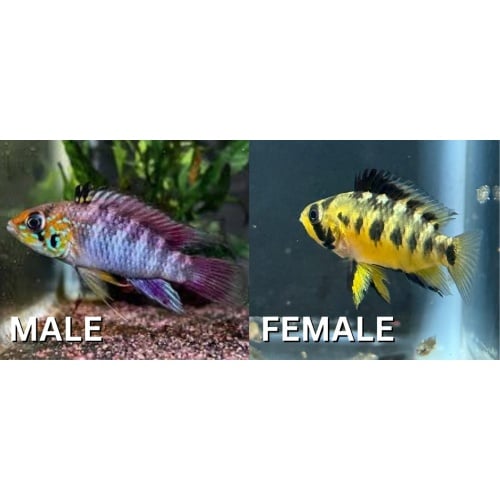
Apistogramma D37
Apistogramma sp. "D37" (commonly known as the Gill Spot or Kiemenfleck Apisto) is a rare and highly sought-after dwarf cichlid from Colombia.Splashed with purple, yellow, and blue from the Rio Vaupes region of Colombia. The 'D' number is the code hobbyists give a wild dwarf cichlid that science has not formally named yet, so you are keeping a fish still waiting for its official debut.Care: Cave spawner. A peaceful dwarf cichlid for planted community or species tanks.This fish is an undescr...
$50.00
Aquazon 0
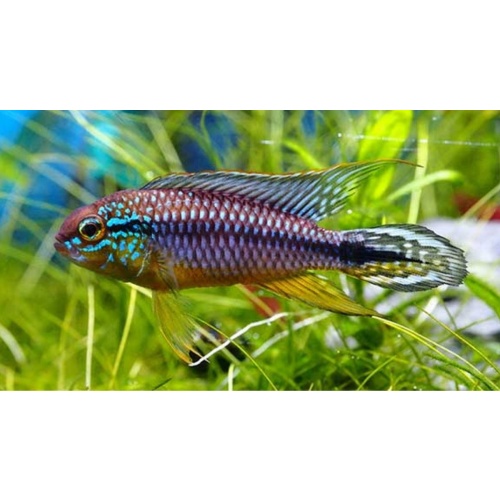
Apistogramma agassizii F1 Pair
Agassiz's Dwarf Cichlid: a living tribute to a legendary naturalist.An F1 pair (first generation bred from wild-caught parents) of Apistogramma agassizii, named for Louis Agassiz, the famous 19th-century naturalist. It is one of the most beautiful and beginner-friendly Apistos going, and Colombian populations from the Rio Vaupes and Rio Negro drainages show off their own unique color patterns.Care: Cave spawner. A rewarding dwarf cichlid for planted tanks.
$40.00
Aquazon 0
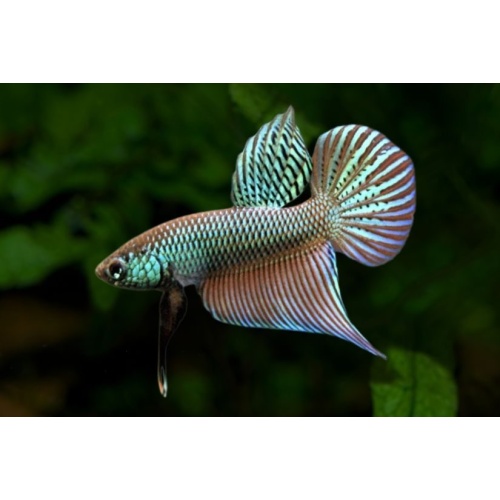
Betta smaragdina "Guitar" WILD TYPE
The Emerald Betta: wild, iridescent, and tougher than any fancy strain.A wild-type pair of Betta smaragdina "Guitar." The name smaragdina is Latin for emerald, and you will see why the instant light catches its green-blue scales. Native to the Mekong and Chao Phraya basins in southeast Asia. Care: Bubble-nest builder. Hardy and adaptable in a warm, gently filtered tank.
$30.00
Aquazon 0
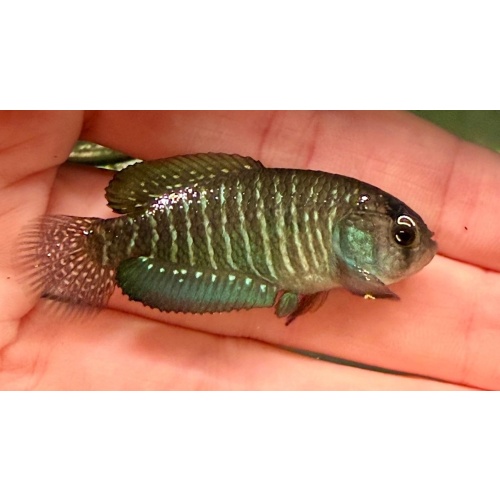
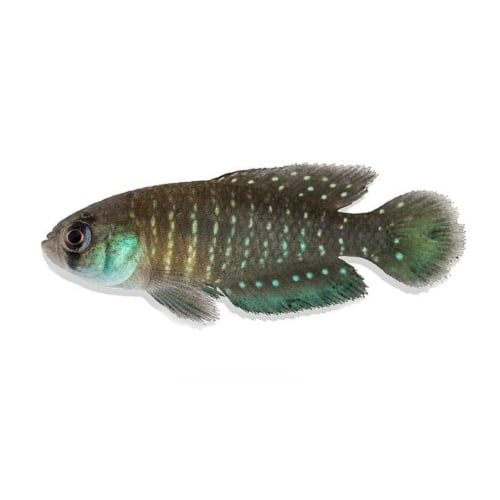
Garcialebias viarius URU 25-01 Puente Sur
Wild-descended F1 pair (first generation bred from wild-caught parents), collected at Puente Sur, Uruguay.Endemic to the Atlantic coastal river basins of Uruguay, this striking annual is slipping away as its seasonal wetlands are drained and built over. Owning a pair is a real chance to help hold the line for a species running out of wild ground. A true standout for the serious annual killifish keeper.Care: Annual species. Spawns in peat, eggs incubate 1 to 2 months. Conservation status: this f...
$52.00
Aquazon 0
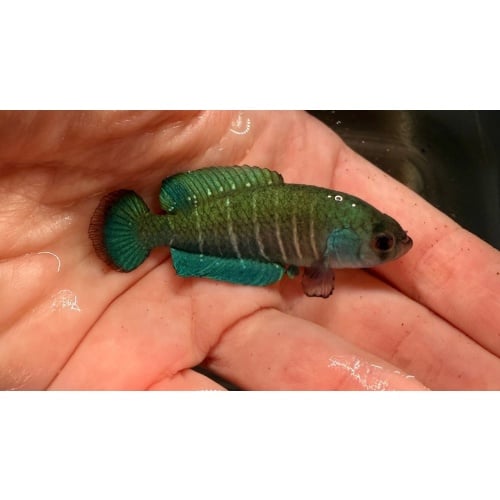
Matilebias duraznensis URU 25-17 Rio Negro
A rare hometown annual from the pools around Durazno, Uruguay.Wild-descended F1 pair (first generation bred from wild-caught parents), collected at Rio Negro, Uruguay.Named for its home city of Durazno, this little annual is endemic to a scattering of seasonal pools in Uruguay's Rio Negro region. It is a genuine rarity in the U.S. hobby, so every captive-bred pair helps keep the line going.Care: Annual species. Spawns in peat, eggs incubate 1 to 2 months.
$42.00
Aquazon 0
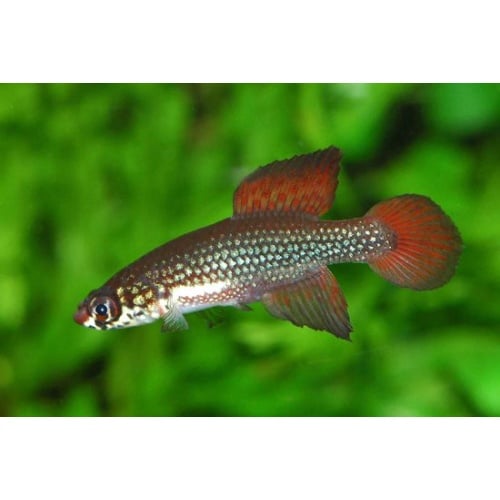
Garcialebias arachan URU 25-11 Rio Negro
Wild-descended F1 pair (first generation bred from wild-caught parents), collected at Rio Negro, Uruguay.The name honors the Arachan, the people of Uruguay's Cerro Largo region, where this fish still appears in temporary freshwater pools and shallow swamps along the border. Seldom seen in the U.S. hobby, it is a treat for collectors who love a fish with a story.Care: Annual species. Spawns in peat, eggs incubate 1 to 2 months.
$45.00
Aquazon 0
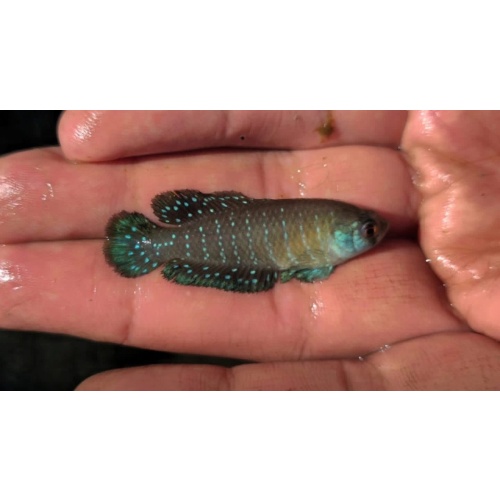
Cynopoecilus melanotaenia URU 25-02 Ruta 9 Capacho
The Fighting Gaucho: a jeweled annual of coastal southeastern wetlands.Wild-descended F1 pair (first generation bred from wild-caught parents), collected at Ruta 9 Capacho, Uruguay.The nickname says it all. Gauchos are the legendary horsemen of the South American pampas, tough, proud, and bold. The males of this species live up to it, flaring their fins and jostling to rule their patch of a shrinking seasonal pool. Care: Annual species. Spawns in peat, eggs incubate 1 to 2 months.
$45.00
Aquazon 0
Matilebias juanlangi URU 25-09 Paso De La Cruz
Matilebias juanlangi: a wild-line annual killifish from the wetlands of Uruguay.Wild-descended F1 pair (first generation bred from wild-caught parents), collected at Paso De La Cruz, Uruguay.A seasonal annual endemic to Uruguay's Neotropical wetlands, where its shallow pampa pools dry out each year. Its wild habitat is shrinking fast, which makes captive-bred fish like these valuable.Care: Annual species. Spawns in peat, eggs incubate 1 to 2 months.
$45.00
-500x500.jpg)
Aquazon 0
Matilebias alexandri URU 25-16 Rio Negro
The Dusky Pearlfish: bright blue iridescence on a wild-line Uruguayan annual.Wild-descended F1 pair (first generation bred from wild-caught parents), collected at Rio Negro, Uruguay.A pampa-pool annual from the Rio Negro region, prized for its glowing blue sheen and fine spotting.Care: Annual species. Spawns in peat, eggs incubate 1 to 2 months.
$47.00
Aquazon 0
Garcialebias charrua URU 25-03 Venancio Flores
Rare wild-line annual killifish from Uruguay, seldom offered in the U.S.Wild-descended F1 pair (first generation bred from wild-caught parents), collected at B.G. Venancio Flores, Uruguay. Collection code URU 25-03.A striking seasonal killifish endemic to the wetlands of Uruguay. The species is named for the Charrua, the indigenous nomadic people of the Rio de la Plata region. Care: Annual species. Spawns in peat, eggs incubate 1 to 2 months.
$42.00